
A featured contribution from Leadership Perspectives: a curated forum reserved for leaders nominated by our subscribers and vetted by the Construction Tech Review Advisory Board.

Salt River Project
How Virtual Assistants Introduced a Smart and Easy Self-Service Channel
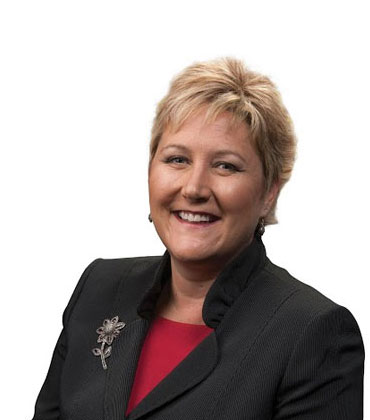
We sought technology that would mimic how our customers speak with us and delved into unchartered territory by selecting a cutting-edge CIVR system hosted by interactions. We decided not to offer everything under the moon within the system, but focus on mimicking the widely used web transactions to enable a consistent experience across our self-service channels. The approach also allowed us to leverage the same system calls, making continued maintenance easier.
When customers call SRP, they are now greeted by ‘Rosie’ in English or ‘Ramon’ in Spanish. Their personas mimic the experience of talking with a real person. It is a significant leap in new technology that has an element of artificial intelligence. Rosie and Ramon respond based on what customers ask for– instead of pushing buttons after listening to a menu of options.
We were the second utility in the nation to implement this particular conversational solution. We had an opt-in IVR prior but chose to front-load our new system for all of our customers and see how it went. With our old system, we were getting about 12 to 15 percent total call containment each month, which is very low compared to industry standards. We figured if we doubled that with the new solution, we’d be doing really well. Currently, we are up to 40 percent call containment, without a blimp to customer satisfaction.
“We were a little bit apprehensive about impacting our customer satisfaction with the CIVR implementation,” said Glen Traasdahl, SRP director of Emerging Customer Technology.
We wanted to make a big leap by replacing our old interactive voice response system (IVR) with emerging technology
“This solution is a win-win because it is easy for customers to navigate through the system, but also allows very easy access to our outstanding customer service agents. After implementation, there has been no impact on our high customer satisfaction metrics.”
We launched with measured implementation. We didn’t go gangbusters right away because we wanted to ensure a smooth customer transition with using the new system. We know our most popular transactions and continually optimize them so the system is easy to use.
Top to bottom, it took nine months to deploy the system. We also leveraged our integration so all of our systems speak from the same sheet of music now. Our customers can interact with us in their preferred method: using our mobile app, their home computer, on their phone or tablet, or call us. They will have the same experience because we are using the same integrations to provide that data.
“We put together an architecture that leverages our enterprise service bus,” said Kevin Carlson, SRP senior director of Information Technology Services. “It’s a messaging layer that facilitates the movement of data between the different systems so we don’t have to recreate integrations between systems again and again. We create it one time and leverage it multiple times across the landscape.”
Our enterprise service bus helps us send out millions of proactive notifications to our customers every year. You put in a CIVR or another self-service channel because you want call volume to go down and become a less expensive transaction. What we have found is the more information we put out there, the hungrier our customers are for knowledge. We have to be able to leverage it in many different ways to get them the information they want, at the time they want and on the channel they want. Plus, it needs to be accurate, personalized and easy to consume. We are communicating to our customers more than we ever have in our history.
One of the key strengths at SRP is that we have really good relationships with our CIO office.
We work really well together. We have to make sure to merge our corporate systems with our customer system while ensuring speed of delivery. To be able to do this well, there has to be a lot of coordination and communication at all times. Everybody has a seat at the table here, which is really important.
“We have a robust and mature governance process that’s been in place for 15 years and contributed to the amount of productivity and what can be accomplished on the IT side,” added Carlson.
This has been one of the most fun and satisfying projects I’ve been on. We didn’t have anyone to ask for help, so we blazed the trail and put ourselves in the customers’ shoes the whole way while protecting their information. It’s been a fun journey for us and now has become part of our brand. Oftentimes, customers don’t know they are not talking to a real person. They often compliment Rosie and love talking to Ramon. It's proof that technology can have a personal touch and you can make systems fun.

